




Series: Digital Marketing: Common Client Questions
The client question: “Customers already find my phone number on Google Maps. What will a website add, and will it improve my ranking?”
The direct answer: A useful website can support your business's wider search presence and give potential customers the information they need to enquire. Simply owning a domain, adding a website link or buying a larger website does not guarantee a higher Google Maps position.
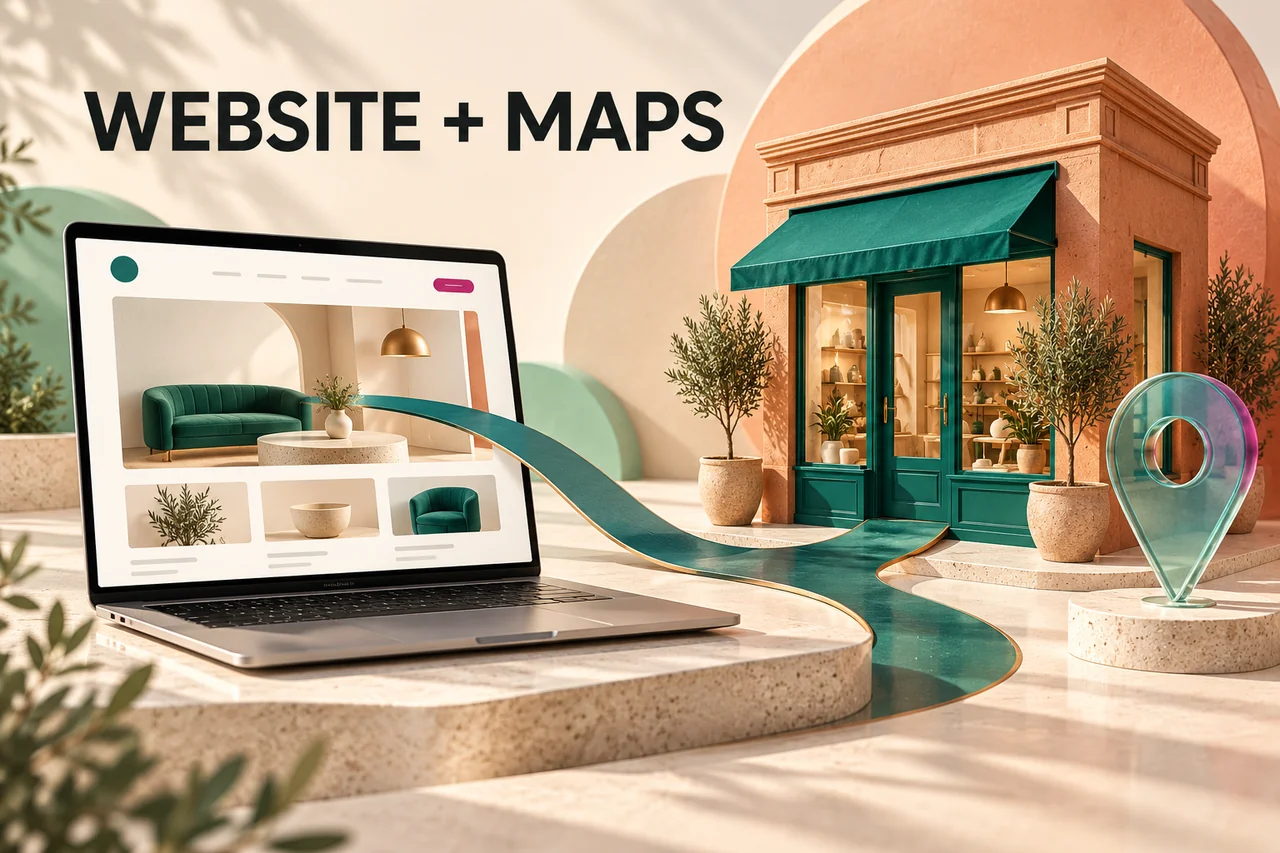
Does a website help Google Business Profile ranking? It can support the work, especially when it clearly represents the real business and its services. Treat the website and profile as connected customer touchpoints, with different jobs to do.
Give the profile and the website different jobs
Your Business Profile helps someone quickly check practical details and find ways to contact or visit you. Your website can explain the questions that need more space: which service suits the customer, what the process involves, what is included and how to request the next step.
For a customer comparing agencies, “website development available” is only the beginning. They may need to know whether content, product uploads, mobile testing and support are included. A useful service page can answer those questions before an enquiry.
That is a reason to build a website even when the profile already receives calls. Better information can improve the quality of a conversation without a change in Maps position.
How a website can support visibility
Google's local ranking guidance includes relevance, distance and prominence. Its business representation guidance also notes that category information can be understood from a business's website and web mentions. Neither document promises a ranking increase just for adding a domain.
Our practical interpretation is to make the business easy to understand across both places. Use clear descriptions of the work you actually do, accurate business details and a sensible link between the profile and your own website.
A website cannot remove a distance disadvantage or make an ineligible location eligible. It gives you another place to provide useful information and earn attention on the merits of the business.
For help connecting these areas, see our Local SEO and Google Business Profile services.
What the linked page should answer
Build around the questions a prospective customer brings from Maps:
- Am I in the right place? Show the business name and clearly describe the service.
- Can you help with my requirement? Explain the scope, exclusions and who the service suits.
- Why should I trust the information? Use genuine work examples, original photographs and accurate team details where appropriate.
- Where do you operate? Describe real locations or service coverage without inventing offices.
- What happens after I contact you? Explain what information to send and what the next step involves.
- Can I act on my phone? Make calling, submitting a form or making a booking straightforward.
A short page that answers these questions well can be more useful than a much larger website full of repeated phrases. Plan the content before choosing decorative effects.
Choose a website destination that fits the business
For a single-location business, the homepage may be suitable when it clearly represents the business and makes its main services easy to find. An established multi-location business may need a genuine location page with the correct local details. The right destination depends on the customer journey and the applicable profile rules.
Avoid sending people to an unrelated company, an expired domain or a generic page that never identifies your business. Open the final destination yourself, including any redirects, and test it without being logged in.
Keep the domain and hosting under business control. If an agency builds the website, agree who owns the accounts, who maintains them and how access is handed over. These are practical business protections as well as maintenance decisions.
Do you need a website before creating a Business Profile?
A website is not a substitute for meeting Business Profile eligibility requirements. Eligible businesses can have a profile without a full website, and a business can receive local enquiries before investing in one.
The decision should follow your customers' needs. A simple local operation may initially need accurate profile details and a reliable contact method. A business selling complex services may need service pages, examples and a structured enquiry process much earlier.
Ask what the customer cannot currently understand or do. That gap is a better guide to website scope than the promise that every extra page will improve Maps ranking. Our business website planning article can help define a useful first version.
An example: the website answers the next question
Illustrative example, not a client case study: A homeowner finds an interior studio on Maps. The profile provides opening hours and a phone number. Before calling, the homeowner wants to know whether the studio handles a complete apartment or only design consultation.
A relevant website page explains both options, shows real work with permission and asks for the property type, approximate scope and preferred contact method. The enquiry arrives with a clearer requirement.
This example demonstrates a better customer journey. It does not demonstrate a measured ranking improvement, and it should not be presented as one.
Mistakes to avoid when connecting the two
- Publishing the website once and allowing service or contact information to become outdated.
- Creating many near-identical location pages for offices that do not exist.
- Copying another business's portfolio or presenting stock images as completed work.
- Linking the profile to a page that fails on mobile or requires a login.
- Adding structured data with invented reviews, locations or business details.
- Expecting a website launch alone to produce qualified enquiries.
Structured data can describe information that is actually present and accurate. It is not a purchase that secures a position in local results. Useful pages still need to be discoverable, understandable and maintained.
Digital Country's recommendation
Build the website around a small set of valuable customer decisions. Start with clear service information, genuine proof, accurate contact details and a working next step. Then connect the correct website destination to the profile.
Review two outcomes separately: how people discover the business and what happens after they visit. This keeps a website project accountable for useful behaviour instead of an unsupported Maps promise.
Our website development services can be scoped alongside local SEO so the content, business information and enquiry process support one another.
Frequently asked questions
Can a one-page website be enough?
Yes, when it explains a simple business clearly and provides an appropriate contact route. Separate pages become useful when different services require substantially different information.
Will a new website automatically move my profile higher?
No. A launch gives you an opportunity to improve information and the customer journey. Local visibility still depends on the wider context of the search and business.
Should my website and Business Profile use the same business details?
They should describe the same real business accurately. Keep customer-facing information current, and follow the rules that apply to storefront and service-area businesses.
What if the profile gets calls but the website gets few visits?
Some customers may have enough information to contact you directly. Review enquiry quality and the questions callers still ask before deciding that website visits alone measure success.
Sources and further reading
- Google: Local ranking guidance.
- Google: Business representation, website and category guidance.
- Google: Business links policies and guidelines.
Guidance checked on 29 October 2026. The page-planning checklist and example are Digital Country's editorial guidance; no specific ranking outcome is promised.
Give visitors a clearer next step.
Plan a website that explains your services, represents your business accurately and makes it easier for suitable customers to enquire.
Plan your business website