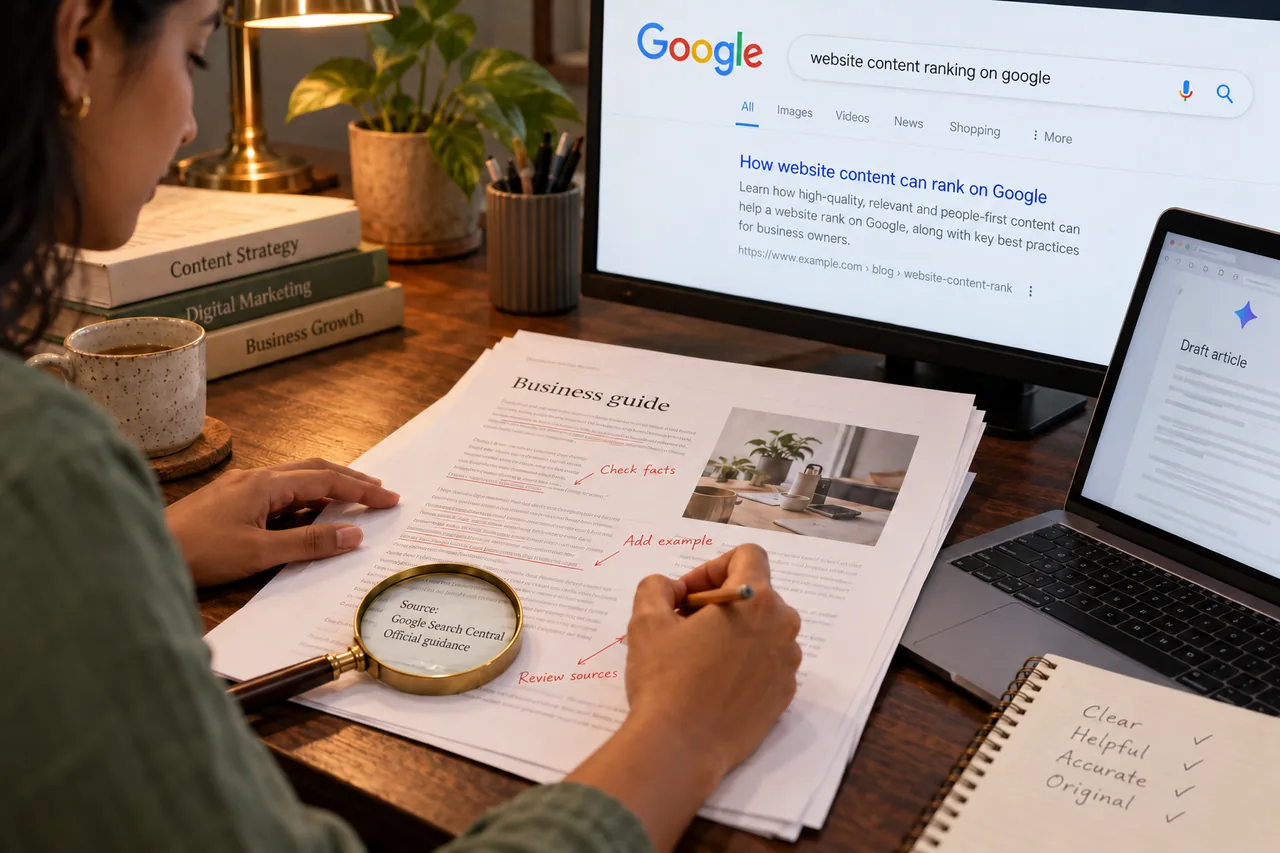






Google Ads can help you test existing search demand with paid placements. SEO helps eligible website pages compete for visibility in unpaid search results. For business leads, the better starting point depends on your timescale, offer, budget, website and ability to follow up enquiries.
Buying Google Ads services does not remove the need for a useful website. Investing in SEO does not remove the need to understand which enquiries become customers. Both channels need relevant pages, a convincing offer and measurement that goes beyond traffic.
This comparison explains the practical differences, shows how to evaluate lead cost and helps you choose a sensible starting plan.
How each channel brings visitors to your website
With Google PPC advertising, you pay for advertising according to the campaign's billing model; search campaigns commonly charge for clicks. Your ads compete in an auction, and their delivery depends on factors such as eligibility, bids, relevance and demand. A Google Ads agency helps plan targeting, messages, budgets, landing pages and ongoing campaign decisions.
SEO involves improving the usefulness and technical accessibility of your website so search engines can understand and potentially show its content. It can include page structure, content, internal links, crawlability and measurement. You do not pay Google a click fee for an organic result, but producing and maintaining useful pages still requires resources.
Google's guidance for businesses hiring an SEO makes an important distinction: paying for advertising does not buy better organic rankings. Treat these as separate channels with opportunities to share useful learning.
Compare speed, control and ongoing effort
When activity can begin: An eligible advertising campaign can start reaching searches after setup and required review, subject to approval and demand. SEO changes need implementation, crawling and evaluation; there is no fixed time by which a page must rank.
Budget control: Ads let you set budgets and adjust campaigns, although spending can vary by day. SEO usually involves an ongoing work budget for technical improvements, content and maintenance. Neither channel becomes free simply because the first setup is complete.
Targeting and messaging: Ads support direct tests of selected offers and queries within the available controls. SEO pages can address detailed questions and buying needs, but you cannot instruct a search engine to award a particular position.
After spending changes: Paused ads stop generating new paid placements through that campaign. Useful organic content may continue to attract visitors, but visibility can change with competition, relevance and website quality. Existing content still needs attention.
When Google Ads services are a useful starting point
Google Ads for lead generation can be a practical option when people already search for your service, you have a clear offer and you need feedback from a controlled paid test. It can also support a time-bound promotion or a service page that is ready to convert relevant visitors.
Begin with a manageable campaign scope. Send traffic to a page that answers the query, explains eligibility or service coverage and offers an appropriate next step. Review search terms and lead quality so irrelevant demand does not keep consuming the budget.
Our Google Ads Services cover the campaign discussion. Ask your PPC management company to explain how it will distinguish a button click, a submitted enquiry and a qualified sales opportunity.
When SEO deserves priority
SEO is particularly relevant when useful demand exists across your services and customer questions, and you can invest in the website over time. It can help organise product information, improve service explanations and make educational content easier to discover.
Before adding articles, check the commercial pages. A business with unclear services, broken links or poor enquiry handling may need those foundations improved first. Publishing more content does not automatically solve a weak buying journey.
Use a focused content plan built around real decisions: what a service includes, which option fits a situation and what information a buyer needs before making contact. Our SEO Services page provides a starting point for that conversation.
Work out lead economics before comparing results
A low cost per click can still produce expensive customers. Track the stages separately: visits, submitted enquiries, qualified leads and won business. Agree on how duplicates, spam, wrong-location requests and unsuitable enquiries will be identified.
Consider a hypothetical paid test with ₹30,000 in media spend and ₹12,000 in management and landing-page work. If it produces 30 valid enquiries, the media-only cost per enquiry is ₹1,000, while the combined cost is ₹1,400. If 10 enquiries meet the business's qualification criteria, the combined cost per qualified lead is ₹4,200.
These numbers are an illustration, not a forecast or an industry benchmark. They show why Google Ads management services should be assessed using the full budget and the quality of the opportunity. The same principle applies when evaluating the cost of SEO work over an appropriate period.
What about Google Ads cost for small business?
There is no universal budget that guarantees leads. The required test allowance depends on search demand, competition, targeting, conversion performance and acceptable acquisition cost. Separate the media budget from fees and creative work.
For most campaigns using an unchanged average daily budget, Google describes a monthly spending limit of 30.4 times that budget. A ₹500 average daily budget therefore corresponds to ₹15,200 under that standard calculation, rather than a strict ₹500 cap every day. Budget changes and certain campaign types have different considerations; review Google's average daily budget guidance and your account's budget report.
Build a combined plan when the foundations are ready
A fictional equipment supplier might use a small search campaign to test whether enquiries for a specific machine are commercially useful. At the same time, it can improve a product page and publish clear buying guidance. Paid search provides one source of feedback; SEO supports the longer-term information structure.
This does not mean every business should split a small budget between both channels immediately. If the website cannot handle enquiries or the offer is unclear, fix that first. When resources are limited, concentrate on one measurable test and a small number of essential website improvements.
Review the combined plan against the sales cycle. A channel that generates enquiries quickly may still require weeks of follow-up before revenue can be assessed.
Frequently asked questions
Is SEO better than Google Ads for leads?
SEO can support ongoing discovery across useful pages, while Google Ads can test targeted demand with a paid budget. The better choice depends on your goal, time horizon and conversion readiness. Compare qualified enquiries and business outcomes, not traffic alone.
Will running Google Ads improve my SEO ranking?
No. Advertising spend does not purchase organic rankings. Insights from search campaigns may inform your content decisions, but paid and organic visibility remain separate.
Can a new website start with Google Ads?
It can be considered after the relevant landing pages, enquiry process, measurement and campaign requirements are ready. Launching ads before those basics are tested can make the first budget difficult to evaluate.
Should I stop SEO when my ads work?
Review the role of each channel rather than making that decision automatically. Consider lead quality, total acquisition cost, dependence on one channel and the value of maintaining useful website content.
Choose the next test around your business goal
Define the service, audience, enquiry criteria and budget before choosing a channel. If you need a focused paid-search plan, explore our Google Ads Services. Bring the website and sales process into the discussion so the campaign can be judged on useful leads.
Plan a search campaign around useful enquiries.
Discuss your offer, landing page and lead criteria before committing to a paid-search test.
Google Ads Services