





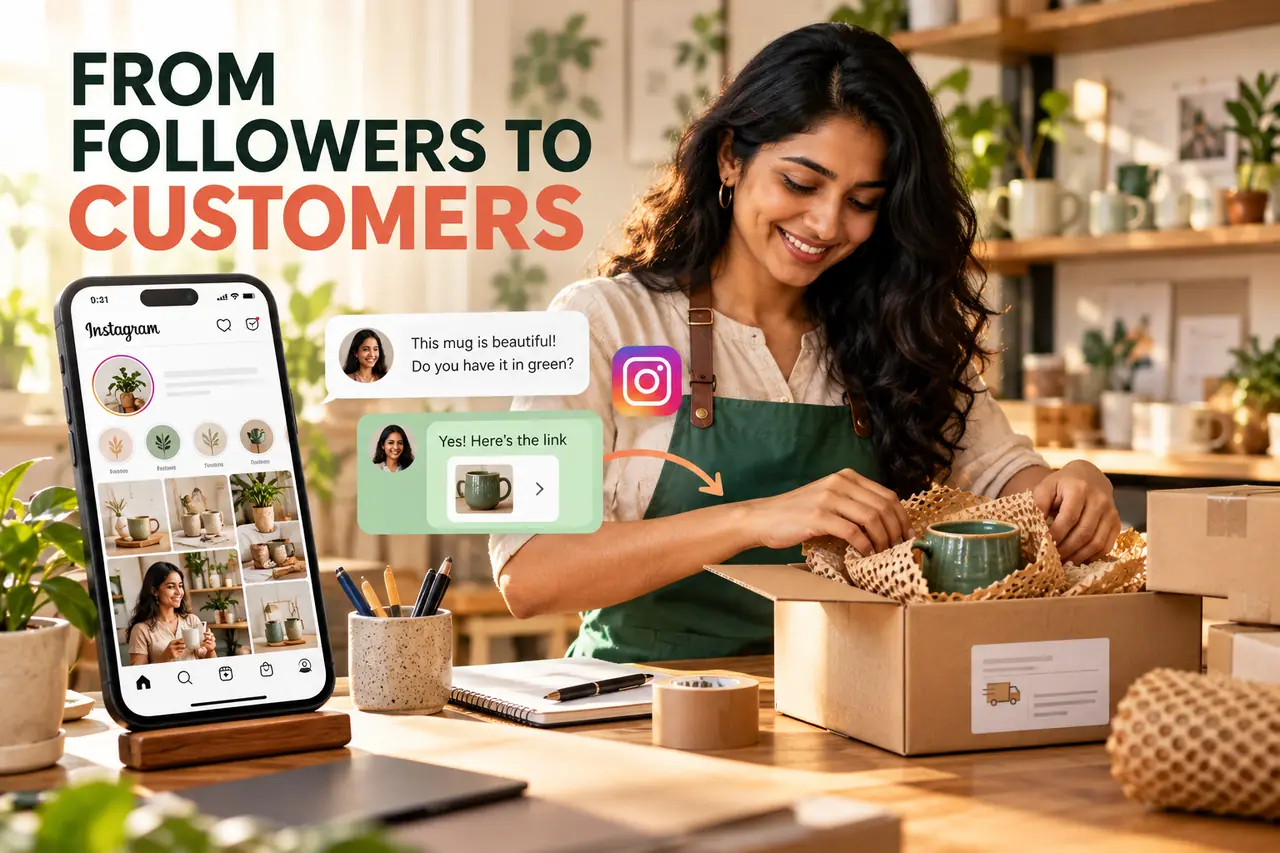
People follow the account, like the work and occasionally ask a question, but the business receives little useful demand. That does not necessarily mean the audience is worthless. It may mean the route from interest to a suitable enquiry or purchase is unclear.
Direct answer: connect relevant content with a clear offer, credible proof, an accessible next step and reliable follow-up. Measure the stages between a follower and a customer instead of treating growth in the follower total as completed business.
This guide examines the commercial journey. Our Instagram engagement article covers whether people respond to the content in the first place.
1. Define which followers can become customers
Identify the real customer requirements: service coverage, product need, eligibility, timing and the business's ability to fulfil the request. Not everyone who enjoys a post will be a suitable prospect today.
Review how the audience discovered the account. Educational content can attract peers, job seekers and customers at different stages. Those groups may all be valid readers, but they should not be counted as identical sales opportunities.
Avoid judging the audience only by its size. Ask which content has produced useful questions, which requirements those people had and whether the business could serve them. Use that evidence to shape a more relevant path.
2. Make the offer understandable on the profile
A new visitor should be able to tell what the business provides, who it serves and how to take the next step. Check the profile information, featured content and linked destination together.
Use clear descriptions instead of a collection of unrelated slogans. Where project pricing depends on scope, explain the information needed for a quote rather than implying that every enquiry receives the same package.
Test the journey from a phone without explaining it to the tester. If someone interested in a specific service cannot locate that service or the appropriate contact route, the problem may sit after the content rather than inside it.
3. Use content for different decision stages
Plan useful explanations for people discovering the subject, comparing options and preparing to act. A demonstration, an honest comparison and a description of the next step can serve different needs.
Use genuine business material with permission: product details, work processes and relevant examples. Do not invent testimonials or customer results to create a stronger sales story.
Avoid turning every post into an immediate sales demand. Equally, a feed that never explains what can be bought may leave suitable followers unsure how the business can help. Connect educational value with a relevant commercial route.
4. Give each action a suitable destination
If a post asks someone to enquire about a service, the link or conversation route should make that task easy. A general homepage with no visible connection to the post can lose the context you just created.
Decide whether the appropriate next step is a product page, a service explanation, a booking request or a conversation. Keep the requested information proportionate and clarify what happens after it is sent.
Use the website enquiry checklist if visitors arrive but do not complete contact. For stores, the traffic-to-order diagnosis can identify whether the purchase journey is the real obstacle.
5. Handle conversations like a business process
Assign responsibility for messages and other enquiries. Prepare useful answers to common questions while allowing staff to respond to the actual situation. A generic automated reply should not become the whole conversation.
Record relevant needs and the next agreed action through an appropriate private process. Do not request unnecessary sensitive information in a public comment. Move order or personal details to a suitable channel.
If the business cannot meet a request, say so clearly. The goal is suitable customer relationships, not pressuring every follower into an unwanted sales sequence. Follow-up should respect the person's choices and the permissions you have.
6. Example: useful attention from outside the service area
Illustrative scenario: a local salon's styling videos attract viewers across the country. The account grows, but most viewers cannot realistically visit the salon. The owner initially expects the follower increase to translate directly into appointment demand.
The team keeps the educational content while making the genuine location, services and booking route clearer. It evaluates relevant appointment enquiries separately from broad video interest.
This does not mean a local business should reject a wider audience or add misleading location labels. It shows why content reach and serviceable demand need different definitions. The example is not a claimed Digital Country client result.
7. Measure the path and improve one stage
Review the signals available for content, profile interest and the next action, then compare them with actual enquiries and orders. Instagram's Insights guidance explains account and content measures; business records complete the later picture.
Use a simple sequence: relevant interest, suitable conversation, agreed next step and completed business outcome. Avoid claiming that a profile-link click is a sale or that every customer can be attributed to one post with certainty.
Digital Country's social media marketing services can connect content with an offer and response process. For the advertising version of this problem, see Meta Ads likes but no leads.
8. Frequently asked questions
Should every follower become a customer?
No. People can follow for many reasons and may not fit the service or buying stage. Focus on the relevant audience and the quality of the journey.
Is a growing account enough proof of business growth?
No. Track suitable enquiries, orders and other actual business outcomes separately from follower growth.
Should I send a sales message to every follower?
Do not treat following as permission for intrusive repeated outreach. Offer a clear way to enquire and use appropriate, respectful follow-up.
Does every post need a purchase request?
No. Match the action to the content and decision stage. The overall profile should still explain what the business offers and how suitable customers can act.
9. Official reference
Platform reference: Instagram Insights. The customer-journey framework and salon example are original editorial guidance. No fixed follower-to-customer conversion rate or revenue promise is implied.
Connect useful attention with a suitable next step.
Review the profile, offer, contact destination and response process alongside the content plan.
Discuss your social customer journey